
Sowing Equipment
Zero-Till Seed Drill Planning: Prepare the System Before Sowing
Tractorbandhu Editorial · 29 October 2026
Plan residue handling, field readiness, machine selection, calibration and hiring arrangements without assuming every zero-till drill is alike.
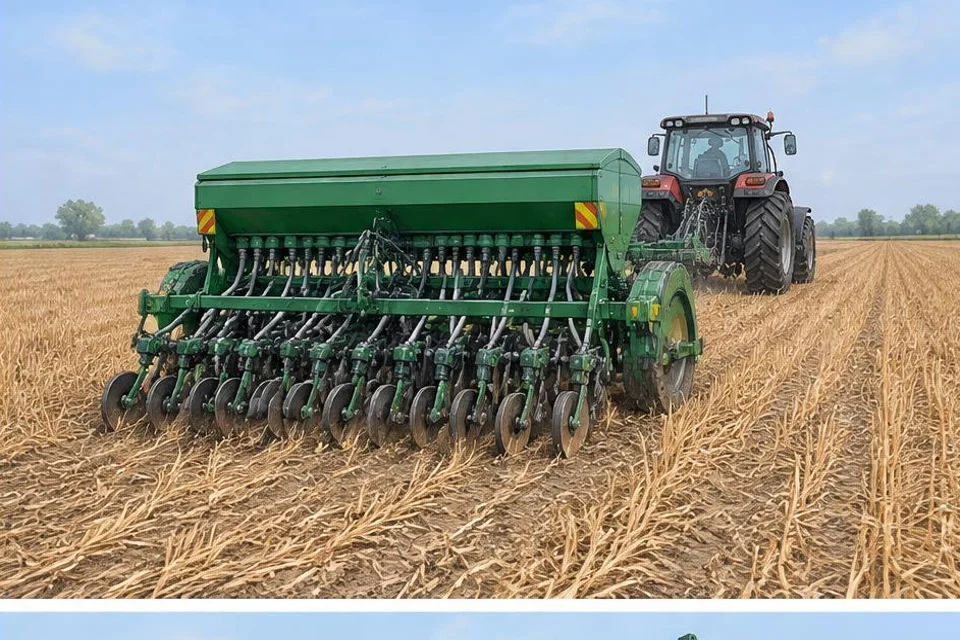
AI-generated illustration · Not a specific model photograph
1. Treat zero tillage as a planned operation
A zero-till seed drill places seed through openers without the conventional full-field seedbed preparation sequence. It does not remove the need to assess field condition, crop requirements or weeds. Begin planning before the previous crop is harvested. Ask your local agronomist whether the intended crop sequence and field condition are suitable, and what preparations are necessary.
- Do not interpret zero tillage as zero planning or zero field inspection.
2. Match the drill to the residue
Record the amount and distribution of loose straw and standing stubble. An ordinary zero-till drill and a residue-handling seeder are not interchangeable in every situation. A Happy Seeder is a specific residue-handling system; its capabilities should not be assumed for every zero-till drill. Ask the supplier to identify the exact machine's residue capabilities and demonstrate it under conditions resembling your field.
- Plan residue distribution during harvest rather than leaving the issue until sowing.
3. Check readiness of field and tractor
Inspect access, field surface, moisture condition and areas likely to obstruct operation. Ask an agronomist about crop-specific sowing readiness and any existing field constraints. Separately, have the dealer confirm hitch, loaded weight, lifting requirements and any PTO or hydraulic needs of the chosen machine. Never transfer compatibility assumptions from one seeder design to another.
- Record the exact tractor model and seeder configuration when booking a service.
4. Calibrate and inspect a short trial
Arrange calibration with the actual seed lot using the manufacturer's procedure. A trained operator should check metering, delivery tubes, opener condition and depth-control arrangements. Before covering the whole field, inspect a short trial for seed delivery, placement and residue interference. Refer crop-related corrections to the agronomist and mechanical corrections to qualified personnel.
- Do not assume last season's settings remain correct for a different seed lot.
5. Secure timing, backup and records
For hiring, agree on the machine model, operator, arrival window, charging basis and responsibility for interruptions. Identify an alternative provider before the sowing period. Keep notes on field condition, calibration, operating date and observed establishment for later review. Any inspection, adjustment or blockage removal requires safe isolation and compliance with the exact manual.
- Judge the system from your recorded results, not promised universal savings or yields.