
Maintenance
Prepare Your Tractor for Winter Starts Without Risky Shortcuts
Tractorbandhu Editorial · 29 October 2026
Understand battery readiness, correct fluids, seasonal diesel and the starting procedure your tractor actually requires.
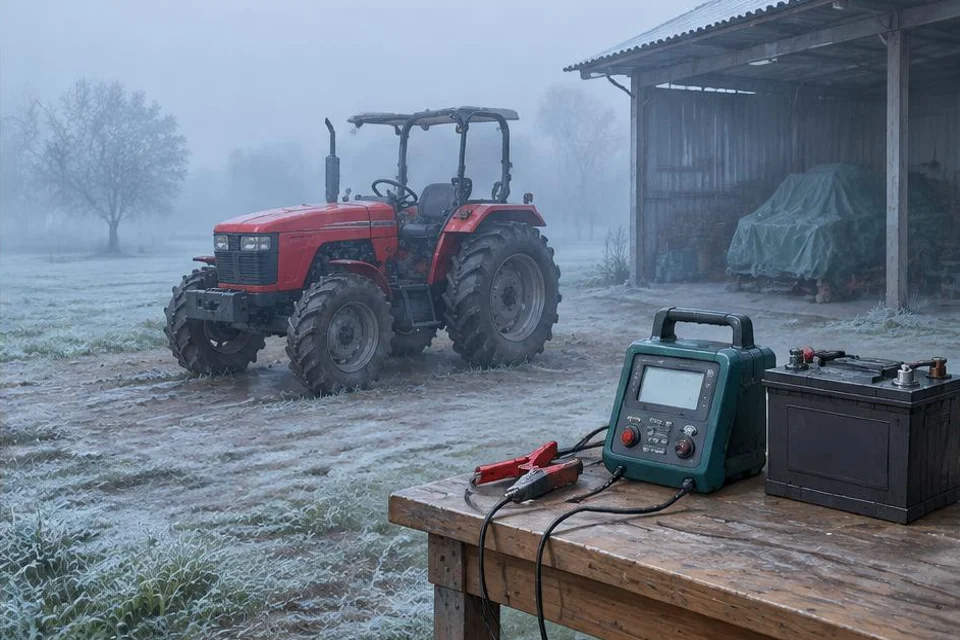
AI-generated illustration · Not a specific model photograph
1. Match preparation to local temperatures
Winter in a frost-prone district needs different preparation from a mild winter elsewhere. Read the temperature-related instructions in your exact operator manual before the season begins. Confirm the specified engine-oil grade, coolant protection and any approved starting aid. Do not copy another tractor's fluid choice merely because its horsepower is similar. A tractor left unused also needs the manufacturer's storage and return-to-service checks.
- Ask the dealer to identify the instructions for your engine and model.
2. Check the starting system before it struggles
Cold weather can expose a weak battery or poor electrical connection. Inspect accessible cables and battery restraints with the machine shut down, following battery precautions in the manual. Have a qualified technician test a battery that cranks slowly or repeatedly loses charge. Charging, jump-starting and battery removal require the correct procedure; improvised connections can damage electrical equipment and create serious hazards.
- Never bypass neutral-start or clutch-start safety devices.
3. Confirm diesel and coolant suitability
Ask your fuel supplier whether the diesel supplied suits expected local temperatures. Water contamination and cold-related fuel restriction are different problems, even when both cause poor running. Keep caps secure and check the separator as instructed. Verify coolant type and frost protection using the approved method. Do not add random antifreeze, petrol or unapproved fuel additives, and never open a hot cooling system.
- Use only fluids and treatments approved for the particular tractor.
4. Follow the specified starting sequence
Start only from the operator's position with the controls set as the manual requires. Use the prescribed preheating sequence where fitted, and obey cranking limits and waiting periods. Never use a flame to warm components or spray starting fluid into an intake unless the manufacturer explicitly permits that system and procedure. Run the engine only where exhaust can disperse safely, not inside an enclosed shed.
- If the engine repeatedly fails to start, stop and arrange diagnosis.
5. Let the whole tractor become work-ready
Starting successfully does not mean the transmission and hydraulics are ready for full load. Follow the manual's warm-up guidance rather than racing the engine or idling for an invented duration. Watch warning indicators and check steering, brakes and lift response in a clear area. Persistent warning lights, unusual noise or sluggish hydraulic action need investigation. Record the temperature and symptoms to help a qualified technician find the cause.
- Begin heavy work only when the prescribed operating checks are satisfactory.