
Ownership
Tractor Warranty and Service Records: Build a Clear History from Delivery
Tractorbandhu Editorial · 29 October 2026
Keep the right documents, follow the applicable schedule and report faults clearly without assuming every repair is covered.
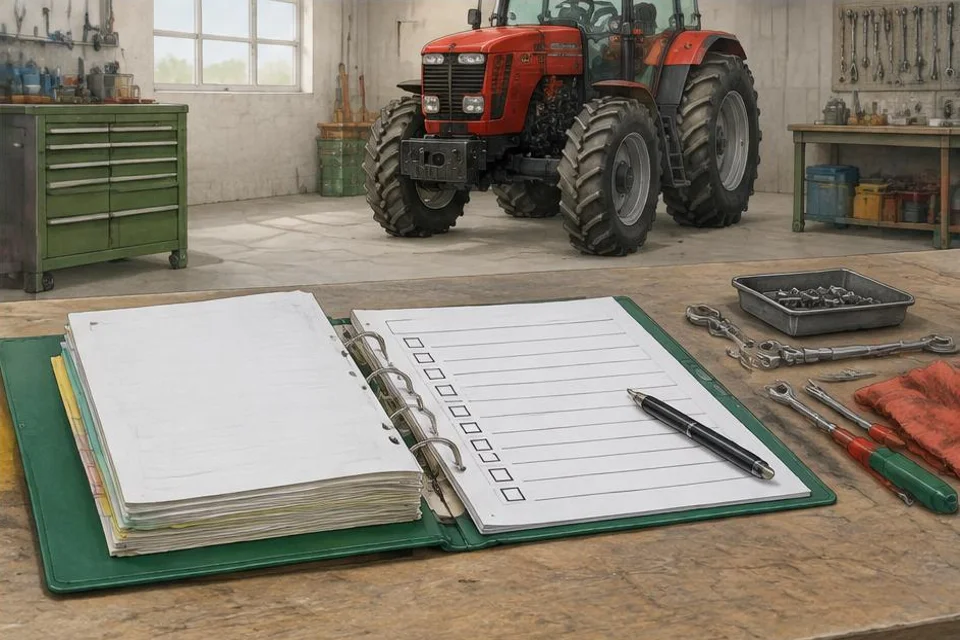
AI-generated illustration · Not a specific model photograph
1. Read the warranty issued for your purchase
Warranty terms depend on the model, market, purchase arrangement and written policy. Obtain the warranty document at delivery and verify the tractor identification, purchaser details and applicable start date. Ask how time and usage limits apply, where relevant. An online offer or another owner's experience is not your contract. Keep the operator manual, delivery checklist, invoice and any separately purchased protection-plan documents together.
- Ask the dealer to explain unclear terms before relying on them.
2. Turn the maintenance schedule into a usable record
Use the exact operator manual to identify scheduled tasks, including calendar-based requirements and special operating conditions. Do not assume maintenance depends only on engine hours. Record the date, hour-meter reading, work performed and who performed it. Where the policy or service process requires dealer stamps or acknowledgements, obtain them promptly. A written entry should describe the actual work, not simply say 'general service'.
- Track the next due service from the applicable schedule, not an invented interval.
3. Keep evidence of parts, fluids and repairs
Retain itemised invoices showing parts identification, lubricant or coolant specifications and labour details. Keep job cards, inspection findings and repair approvals with the matching service entry. If maintenance is permitted outside the dealer network, ask what evidence the warranty requires; do not assume permission or prohibition. Clear records help explain what was fitted and when, but they do not guarantee that a claim will be accepted.
- Store readable digital copies as well as the original documents.
4. Report a fault before it becomes a dispute
Note when the problem began, the operating conditions, warning messages and hour-meter reading. Contact the appropriate authorised service channel and request a job reference. Follow instructions about stopping use, inspection and repair approval; continuing with a serious warning can worsen damage. Do not dismantle major assemblies or authorise unapproved modifications while a claim is being assessed. Qualified technicians should perform repairs under the applicable process.
- Photograph visible warnings only when it is safe and the tractor is secured.
5. Separate coverage questions from maintenance costs
Ask specifically about wear items, routine servicing, transport charges, attachments and any extended plan. Coverage and exclusions must come from your written terms, not assumptions about what 'full warranty' means. Request a written explanation if a claim is declined and use the manufacturer's escalation process if needed. A complete service history can also inform a future buyer, but it does not promise a particular resale price.
- Before resale, confirm whether any remaining coverage is transferable and on what conditions.