
Field Performance
Tractor Tyre Pressure and Ballast: Match the Setup to the Actual Load
Tractorbandhu Editorial · 29 October 2026
Understand why tyre pressure, axle loading, implement position and approved ballast must be considered together.
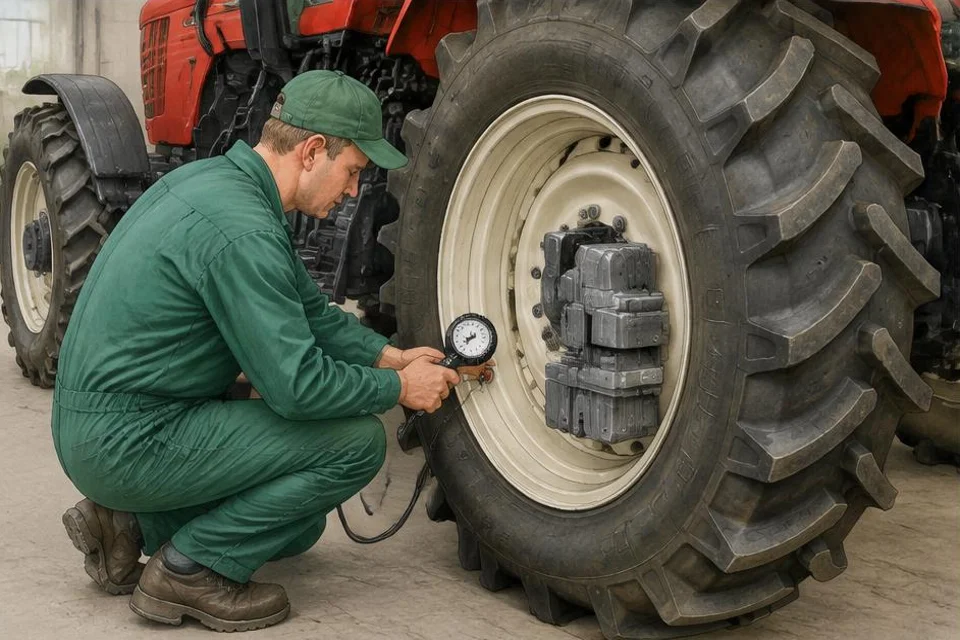
AI-generated illustration · Not a specific model photograph
1. Start with the tractor's working configuration
There is no single correct tyre pressure for every tractor and task. The fitted tyre size, construction, load, travel speed and field or road use all matter. A mounted implement changes axle loading, especially when raised for transport. Use the exact tractor manual and applicable tyre-maker load-and-inflation information. Record whether a recommendation assumes a loader, rear implement, wheel weights or other ballast.
- Do not copy pressure settings from a tractor with a different setup.
2. Measure correctly instead of judging the sidewall
Check pressure under the conditions specified by the manufacturer, normally with tyres cold, using a suitable gauge. Appearance alone is unreliable, particularly across different tyre constructions. Inspect for cuts, bulges, damaged valves and rim problems before adjusting. Do not bleed pressure from a tyre merely because it increased during work. Follow the tyre and tractor instructions, and have unsafe damage assessed by a trained tyre professional.
- Tyre fitting, rim repairs and dangerous inflation work belong with trained specialists.
3. Understand what ballast can and cannot do
Approved ballast helps achieve the weight distribution needed for a particular attachment and operating condition. More weight is not automatically better: unnecessary ballast can increase soil loading and operating effort. Too little front weight with a rear-mounted implement can impair steering and stability. Follow the manufacturer's ballast tables, attachment requirements and axle limits. Never improvise weights or attach them to unapproved mounting points.
- Liquid ballast also requires approved materials, quantities and professional handling.
4. Diagnose wheel slip before adding weight
Some slip is part of traction, but persistent excessive spinning calls for investigation. Consider soil moisture, implement depth, tyre condition, pressure and the selected gear before adding ballast. Working ground that is too wet may damage soil without improving useful output. If your tractor provides a slip display, interpret it using the manual. There is no universal slip target suitable for every tyre, soil and tractor.
- Stop if steering becomes light or directional control deteriorates.
5. Recheck when the job changes
A field setup may need revision before road transport or when fitting another implement. Ask the dealer to verify actual axle loads where needed and provide the approved pressure and ballast arrangement. Four-wheel-drive tractors also have tyre compatibility requirements; replacement sizes cannot be chosen independently. Keep setup notes for recurring jobs, but recheck after changes. A qualified technician should handle wheel changes, weight installation and related repairs.
- Never exceed tyre, wheel, axle or tractor limits to carry a heavier load.