
Field Performance
Tractor Transmission and Gear Selection: Useful Speeds Matter More Than Gear Count
Tractorbandhu Editorial · 29 October 2026
Choose and operate a transmission around field speed, PTO requirements, reversing work and safe shifting procedures.
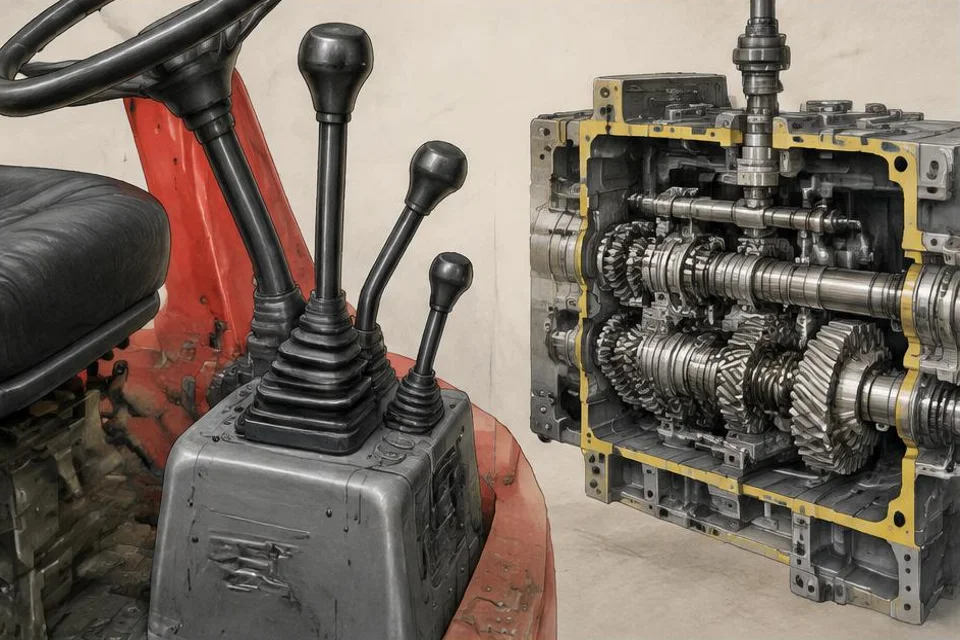
AI-generated illustration · Not a specific model photograph
1. Read the speed chart before counting gears
A transmission with more gears is not automatically better suited to your farm. What matters is whether its usable speeds match sowing, cultivation, spraying or transport requirements. Ask for the model's speed chart and note the tyre size and engine speed used to calculate it. Two tractors with similar gear counts can offer very different spacing between the speeds you actually need.
- List your implement working speeds before comparing transmissions.
2. Know which shifts require a complete stop
Unsynchronised, synchronised, shuttle and hydrostatic systems do not share one shifting procedure. Some transmissions synchronise selected gears but not ranges or direction changes. Others require different clutch use or operating conditions. Read the exact manual and ask the dealer to identify each restriction. Never force a resistant lever, assume every shift is allowed while moving or bypass a starting interlock.
- A shuttle lever does not by itself prove clutch-free reversing is permitted.
3. Separate ground speed from PTO speed
A PTO-driven implement may require a specified PTO speed while the tractor must travel slowly enough for good work. Select a gear or range that meets both requirements using the tractor and implement manuals. Reducing engine speed just to reduce travel speed may leave the implement below its required operating speed. Do not select an economy PTO setting unless the implement and load are suitable for it.
- Never exceed the implement's specified PTO speed.
4. Respond to load without abusing the clutch
Persistent engine struggling, excessive smoke or repeated stalling can indicate an unsuitable gear or excessive load, although faults can produce similar symptoms. Reduce the demand and select an appropriate gear by the approved procedure. Do not control continuous working speed by slipping the clutch. If the tractor still struggles with a suitable setup, have a qualified technician investigate instead of assuming more throttle will solve it.
- Match implement width and working depth to the tractor and conditions.
5. Evaluate transport and repetitive manoeuvring separately
For loader or yard work, assess low-speed control, reversing effort and operator familiarity during a safe dealer demonstration. For transport, follow the manual's gear, braking and load instructions; never coast downhill in neutral. Check that the tractor can control the attached load within its ratings. Record the successful gear and operating setup for recurring field jobs, but adjust when soil, load or implement changes.
- Choose a transmission for controllability and task fit, not a promised fuel saving.