
Equipment Safety
Tractor Sprayer Compatibility and Safety: What to Check
Tractorbandhu Editorial · 29 October 2026
Check loaded weight, PTO and hydraulic compatibility, guards, clean-water testing and operator readiness without relying on chemical dosage shortcuts.
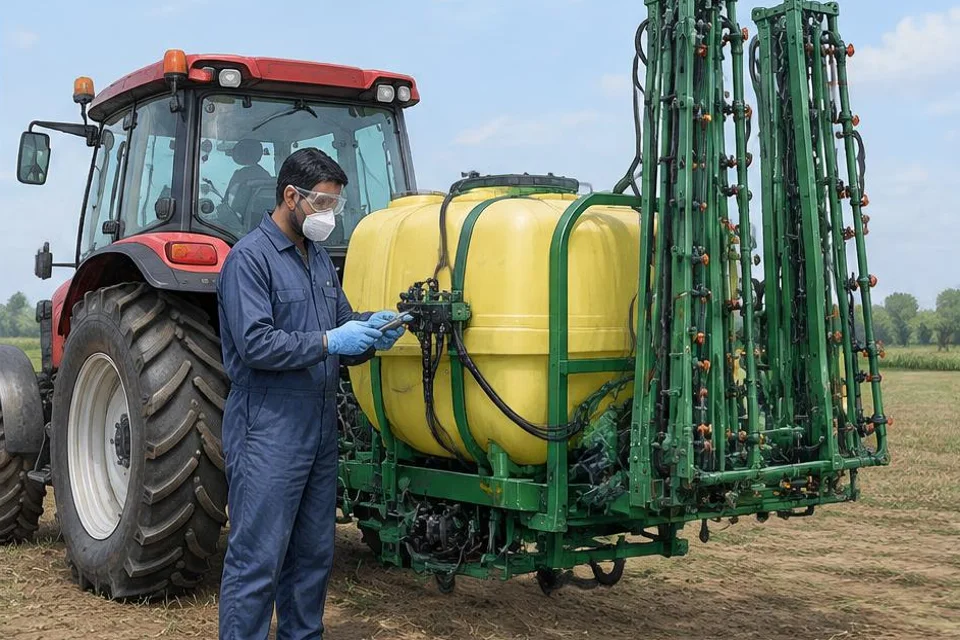
AI-generated illustration · Not a specific model photograph
1. Match the sprayer type to the work
Identify whether the proposed sprayer is mounted, trailed or another approved design, and whether its application system suits the crop and field layout. Tank capacity and boom width are not enough to establish suitability. Ask a local agronomist about crop-protection requirements and the supplier about the machine's intended use. This checklist does not provide chemical selection or dosage advice.
- Use the exact sprayer manual and applicable product label, not informal operating shortcuts.
2. Assess the fully loaded combination
Liquid and accessories add weight, and their position affects tractor balance. Have an authorised dealer check permitted mounted loads or towing limits, hitch compatibility, axle and tyre limits, and any approved ballast requirement. For powered systems, match specified PTO speed and power or hydraulic requirements. A tractor's engine horsepower or lift-capacity headline alone is not sufficient.
- Confirm compatibility for the intended working configuration, not just an empty tank.
3. Inspect guards, hoses and controls
Ask qualified personnel to inspect the PTO driveline and guards, pump, hoses, fittings, valves, filters and pressure indication. Damaged guards or leaks require correction before use. Never search for pressurised leaks with bare hands or improvise incompatible PTO adapters. Attachment, driveline assessment and repairs belong with trained personnel following both manufacturers' instructions.
- Keep people clear of rotating shafts and other moving equipment.
4. Arrange a controlled clean-water check
Before application, have a trained operator conduct the manufacturer's checks with clean water in a suitable area where runoff is controlled. Confirm leak-free operation, functioning controls and nozzle condition, and complete the specified calibration. Keep bystanders away. Crop suitability, nozzle choice and application decisions need appropriate technical advice; do not infer a chemical dose from tank size.
- Do not clear nozzles by mouth or adjust equipment while hazardous parts are moving.
5. Plan the whole working day
Check weather restrictions, nearby people, water sources and sensitive areas against the applicable label and local requirements. Provide specified protective equipment, training and a safe cleaning and waste-handling plan. Follow the manual's shutdown, isolation and pressure-release procedure before inspection. Store equipment securely and record servicing, faults and calibration so the next operator knows its condition.
- Postpone work when safe operating conditions or required instructions cannot be met.