
Troubleshooting
Tractor Overheating: Recognise Warnings Before Continuing Work
Tractorbandhu Editorial · 29 October 2026
Know what temperature warnings mean, how to respond safely and which checks belong with a qualified technician.
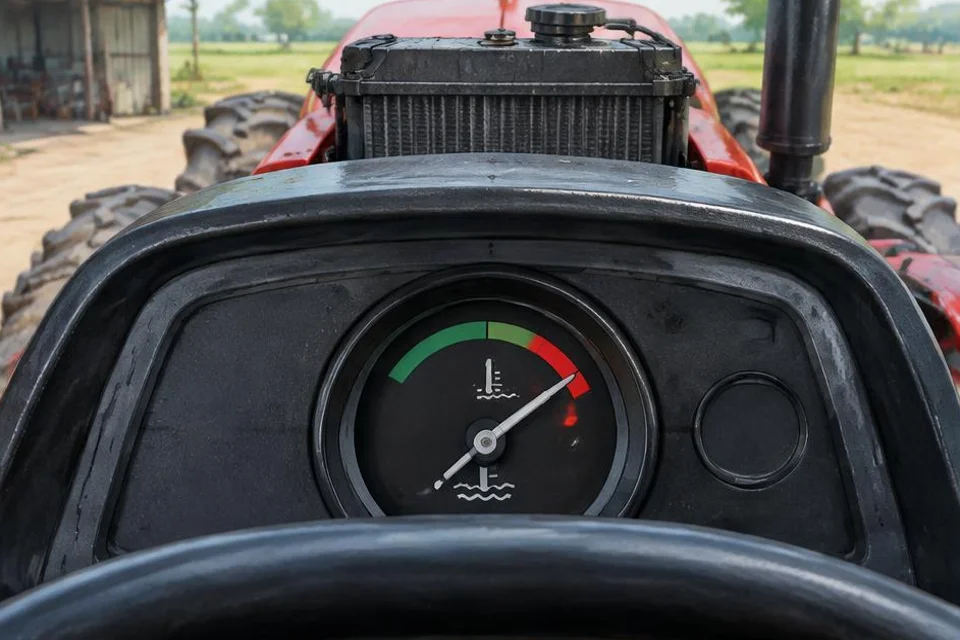
AI-generated illustration · Not a specific model photograph
1. Learn the tractor's normal warning behaviour
A rising temperature gauge, coolant-temperature warning, steam or sudden change in engine performance deserves attention. Learn the normal display and warning meanings from your exact operator manual before fieldwork. Not every tractor uses the same gauge markings, and an electrical fault can also affect a reading. Do not assume an unusual indication is harmless simply because the tractor still pulls its implement.
- Note which warning appeared and what work the tractor was doing.
2. Respond without creating another hazard
Stop demanding work and move to a safe stopping place only if it is safe to do so. Follow the manual's specific overheating and shutdown instructions; do not substitute a universal idling rule. Lower equipment and secure the machine. Keep clear of steam, hot surfaces and moving parts. Never remove a radiator or expansion-tank pressure cap while the cooling system is hot.
- Do not continue a pass just to finish the remaining field strip.
3. Consider restricted airflow and excessive load
Chaff, dust and crop residue can obstruct cooling screens and radiator airflow. Clean them only after the machine is safely stopped and cooled, using the approved method. An unsuitable gear, excessive implement load or operating conditions beyond the tractor's capability can also increase heat stress. Once the fault is resolved, select a suitable gear and working depth rather than forcing the engine to struggle.
- Never reach toward a fan or remove guards to clear debris while running.
4. Check only what the manual permits
After adequate cooling, inspect accessible areas for visible coolant leakage or damaged hoses and check levels by the specified procedure. Use only the approved coolant specification; colour alone does not establish compatibility. Do not add cold liquid to a hot engine or alter belt adjustment without the correct procedure. Thermostat, pump, fan-drive and internal engine faults require diagnosis rather than guesswork.
- Arrange qualified repair for leaks, damaged components or recurring temperature warnings.
5. Make restarting a decision, not a habit
A cooled gauge does not prove the underlying problem has disappeared. If coolant has been lost, steam was present or the warning returns, seek professional advice before restarting or returning to load. Give the technician the warning details, implement used, recent maintenance and any observed leakage. After authorised repair, follow the prescribed checks and monitor the display. Keep the repair record to identify patterns if the problem recurs.
- Never remove a thermostat or bypass a warning system as a field fix.