
Maintenance
Tractor Monsoon Maintenance: Keep Water and Mud from Becoming Costly Trouble
Tractorbandhu Editorial · 29 October 2026
Prepare for wet-field work with practical checks for drainage, electrical protection, fuel cleanliness, brakes and safe storage.
AI-generated illustration · Not a specific model photograph
1. Prepare before the first wet-field job
Monsoon preparation starts with the exact operator manual for your tractor, not a universal service calendar. Identify checks required for wet or severe operating conditions. With the tractor safely parked, implements lowered and engine stopped, inspect accessible hoses, protective covers and visible wiring. Arrange repairs before entering muddy fields; a damaged boot or loose cover can let moisture reach components that normally stay protected.
- Keep the manual, dealer number and tractor identification details accessible.
2. Keep water out of fuel and electrical connections
Buy diesel from a reliable supplier and keep filling equipment clean and covered. Inspect the fuel-cap seal and use the specified replacement if damaged. Follow the manual for checking the water separator; do not loosen unfamiliar fuel-system fittings. Examine visible electrical connectors for damaged protection without dismantling sealed parts. Repeated starting trouble after rain needs diagnosis, not repeated cranking or makeshift wiring.
- Never bypass a starting interlock to overcome a wet-weather fault.
3. Remove mud without forcing water inside
Accumulated mud can hide leaks, obstruct cooling airflow and make steps slippery. Clean only after parking safely and allowing hot components to cool. Follow the manufacturer's washing instructions and avoid directing pressurised water at air intakes, electrical equipment, seals or bearings. Remove accessible debris using the approved method, keeping guards fitted. Check the radiator screen from a safe position rather than reaching toward the fan.
- Keep steps, pedals and handholds free of slippery deposits.
4. Treat traction and braking as changing conditions
A familiar track may become unsafe after heavy rain. Check tyres for visible damage and use pressures appropriate to the fitted tyres and actual loads. Test braking response in a clear, level area as the manual permits. Avoid floodwater: its depth, current and hidden ground damage are difficult to judge. If water may have entered the intake or drivetrain, do not restart until a qualified technician assesses it.
- Four-wheel drive does not make flooded ground safe.
5. Finish the day with a dry parking routine
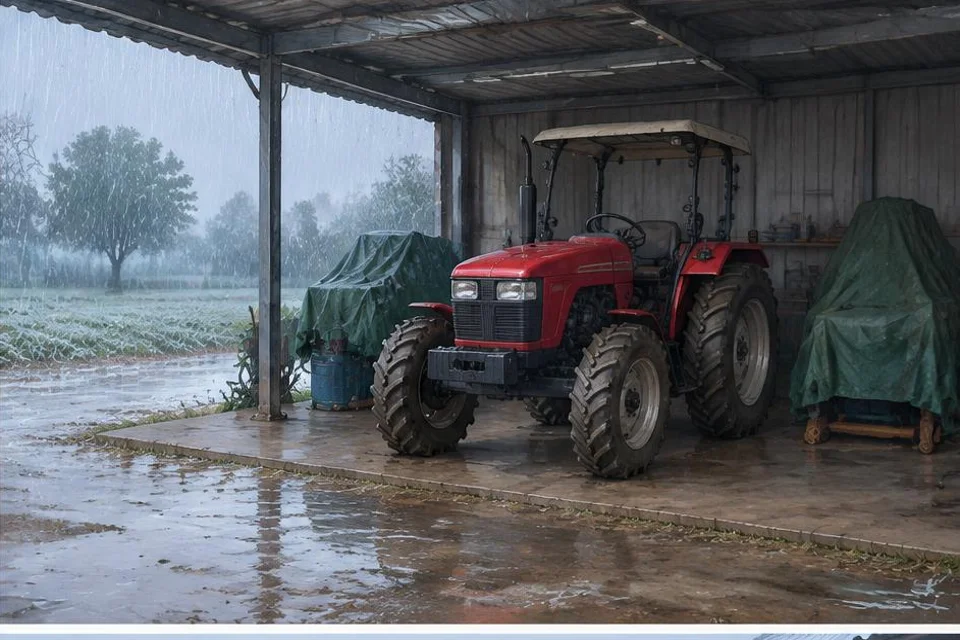
Park on firm, well-drained ground under suitable shelter where possible. Lower attachments, secure the tractor and allow moisture to dry without covering hot equipment. Note warning lights, unusual noises and any change in steering or braking. Check fluid condition only by the manual's procedure; unusual cloudiness or a rising level needs investigation. Record defects and let a qualified technician handle repairs before the next demanding shift.
- Do not postpone a safety-related fault because the sowing window is short.