
Implement Matching
Tractor Hydraulic Lift Capacity: Why the Brochure Number Is Only the Beginning
Tractorbandhu Editorial · 29 October 2026
Compare lift ratings correctly and check implement reach, hitch compatibility, axle loading and hydraulic requirements.
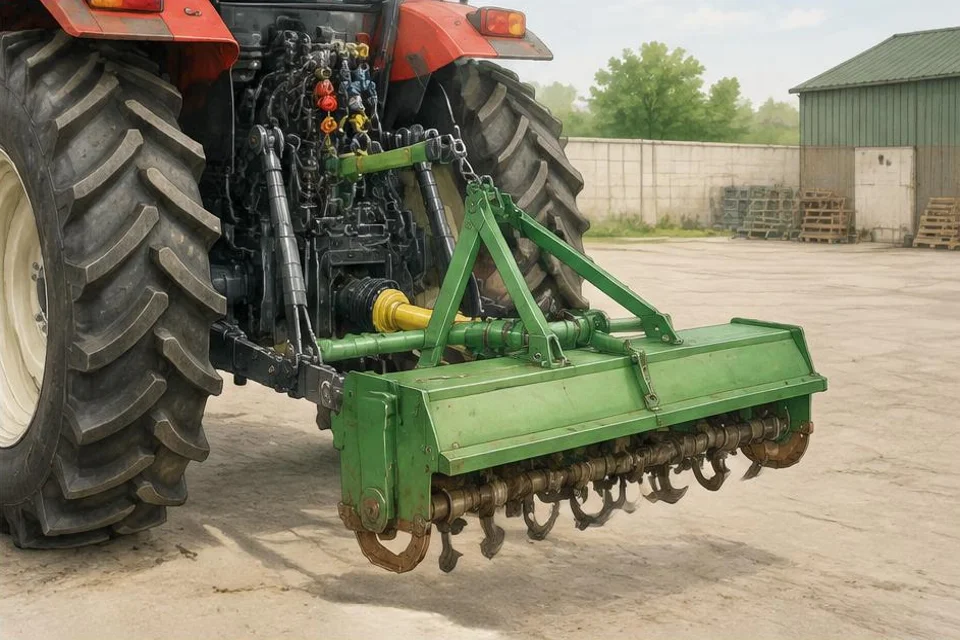
AI-generated illustration · Not a specific model photograph
1. Ask where the lift rating is measured
A hydraulic lift figure is meaningful only with its measurement conditions. Capacity quoted at the linkage ends is not directly comparable with a rating measured farther behind them. Capacity may also vary through the lift range. Ask the dealer for the exact model's rating definition and applicable limits. Do not treat the largest advertised number as permission to attach any implement of the same mass.
- Compare ratings measured at the same reference point and under equivalent conditions.
2. Include the implement's centre of gravity
An implement whose weight sits farther behind the tractor creates more leverage than a compact implement of equal mass. That affects lifting demand and weight distribution. Seed, fertiliser, water or other carried material also adds working weight. Obtain the implement manufacturer's mass, centre-of-gravity information where available and tractor requirements. Ask about both lifting through the intended range and carrying the implement safely.
- Use the fully equipped and loaded implement weight, not only its empty weight.
3. Check the hitch and the complete tractor
Linkage category, pin dimensions, permitted geometry and stabiliser arrangements must suit the attachment. Lifting successfully does not prove that steering, axle loads, tyres and stability remain acceptable. A rear-mounted implement may require approved front ballast, but ballast does not cancel axle or tractor limits. Have the dealer check the complete combination against the exact manuals before purchase, including transport configuration and any attachment-specific restrictions.
- Never stand beneath a raised implement or rely on hydraulics as a support.
4. Separate lifting ability from hydraulic performance
Lift capacity does not tell you everything about hydraulic flow, remote outlets or implement response. A hydraulic motor or loader may need a specified flow, pressure, valve arrangement and return connection. Confirm compatible couplers and approved oil requirements. More pressure is not a safe cure for a mismatch. Never adjust a relief valve to exceed specifications, and never search for a high-pressure leak with your hand.
- Leave hydraulic repairs and pressure testing to a qualified technician.
5. Demonstrate the intended combination safely
Request a controlled demonstration with the actual implement or a properly representative approved setup. Check clearance, lift travel and the manufacturer's required control functions without bystanders near the linkage. Follow the manual for connecting, relieving pressure and disconnecting. Lower equipment before parking or servicing. Unusual dropping, jerky action or leakage requires diagnosis; it is not a reason to keep increasing engine speed or alter the system.
- Get the dealer's compatibility recommendation in writing before committing.