
Maintenance
Tractor Air Filters in Dusty Fields: Inspect Correctly, Avoid Over-Cleaning
Tractorbandhu Editorial · 29 October 2026
Learn why filter design, restriction indicators, sealing and the approved cleaning method matter more than appearance alone.
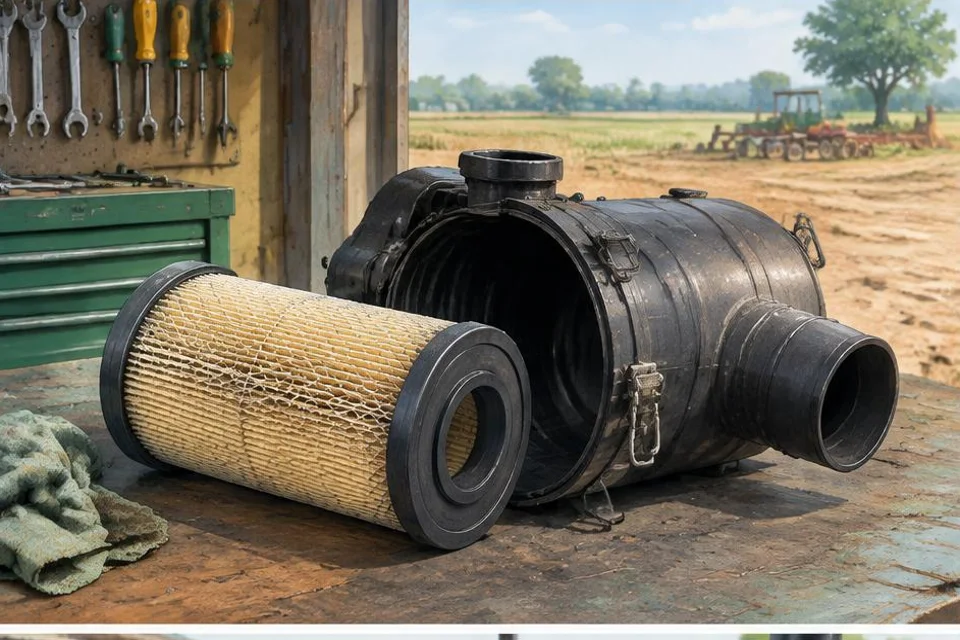
AI-generated illustration · Not a specific model photograph
1. Identify the cleaner fitted to your tractor
Dusty cultivation and threshing-area work challenge the engine's air-cleaning system. First identify whether your tractor uses a dry-element cleaner, an oil-bath arrangement or another specified design. Their maintenance procedures are not interchangeable. Read the exact operator manual, including severe-dust instructions and any restriction-indicator guidance. A neighbour's successful cleaning routine may damage a different filter or leave its engine exposed to unfiltered air.
- Confirm the correct replacement element using the model and part number.
2. Check the intake path, not only the element
With the engine stopped and the tractor safely parked, inspect accessible intake hoses, clamps and the cleaner housing for visible damage. Dust can enter through a split hose or poor seal even when the element is sound. Keep the intake opening and any pre-cleaner clear by the approved method. Never run the engine with the filter removed to see whether performance improves.
- Keep every removed opening protected from loose dirt during approved servicing.
3. Use the indicator and manual together
A dusty outer surface does not by itself establish that an element needs replacement. Where fitted, the restriction indicator helps show airflow restriction, but its interpretation and reset procedure are model-specific. Check when instructed, especially in demanding dust conditions. Repeatedly opening a housing just to inspect it can introduce dirt. Record warnings and service actions rather than relying on appearance or a fixed routine borrowed from another machine.
- Investigate a recurring restriction warning instead of repeatedly resetting it.
4. Cleaning permission is not universal
Some elements permit limited cleaning; others require replacement. Do not wash a paper element, strike it against a tyre or use compressed air unless the exact manual permits the method. If air cleaning is authorised, its direction, pressure limit and protective precautions must also be followed. An inner safety element may have separate replacement rules. Damaged, wet or incorrectly seated elements need attention before further operation.
- Do not apply oil to a dry element unless explicitly instructed.
5. Restore sealing and watch for repeat problems
Correct installation matters as much as choosing the right element. Follow the specified seating, cover and fastening procedure without improvising seals. If you find dust downstream of the filter, an unexplained power loss or repeated warnings, arrange inspection by a qualified technician. These signs are not proof of one particular fault. Keep service dates and operating conditions recorded, and follow your own manual's replacement limits and maintenance requirements.
- Ask the technician to check the complete intake system, not just the filter.