
Sowing Equipment
How to Select a Seed Drill for Your Crops and Tractor
Tractorbandhu Editorial · 29 October 2026
Compare metering, row arrangement, field suitability, calibration support and service access before selecting a seed drill.
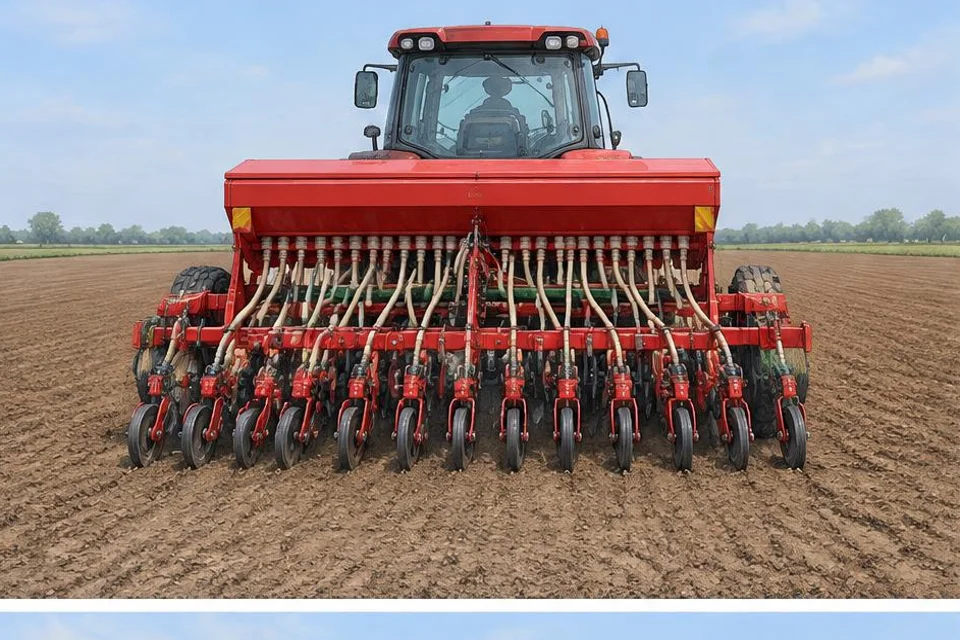
AI-generated illustration · Not a specific model photograph
1. Build a crop and field requirement sheet
List the crops, seed types, intended row arrangements and field conditions in which the drill will work. A conventional seed drill intended for prepared land is not automatically suitable for heavy residue or untilled ground. Confirm crop suitability with the manufacturer and ask a local agronomist about spacing, sowing depth and establishment needs for your location.
- Include future crops only when their requirements are realistically known.
2. Examine how seed reaches each row
Ask how the metering system handles your actual seed, including differences in size and shape. Inspect seed tubes, furrow openers, row-spacing adjustment and depth-control arrangements. Where fertiliser placement is included, confirm that the machine's design suits the agronomic recommendation. A familiar model name does not establish accurate placement or suitability for every crop.
- Request a demonstration with your seed rather than relying only on an empty-machine display.
3. Check the loaded tractor combination
Match hitch category, machine dimensions, hydraulic requirements and transport arrangement against both manuals. Hopper contents add to the machine's working weight, so ask about the permitted loaded configuration rather than empty weight alone. Check field entrances and turning space. Have an authorised dealer assess lifting suitability and balance; do not select solely from engine horsepower.
- Confirm whether the quoted package includes all required approved accessories.
4. Make calibration part of delivery
Calibration checks how much seed the selected settings actually deliver. Have a trained person demonstrate the manufacturer's procedure, recording the seed lot, settings and measured result. Inspect delivery across outlets and arrange a short field check of placement before committing the whole area. Repeat checks when seed characteristics or machine condition change, following the manual.
- A numbered setting is a starting reference, not a universal sowing recommendation.
5. Compare seasonal support and total cost
Ask about replacement openers, metering components, tubes, bearings and local service response during sowing. Compare purchase or hire charges alongside transport, cleaning, storage and downtime arrangements. Obtain the exact manual and operator training. Trained personnel should handle attachment and adjustments, with the machine safely stopped and isolated before anyone approaches hazardous parts.
- Keep calibration and maintenance records for the next crop and season.