
Land Preparation
Laser Land Leveller: A Buying and Hiring Checklist
Tractorbandhu Editorial · 29 October 2026
Check the field plan, complete equipment package, tractor compatibility, operator skill and contract terms before booking levelling work.
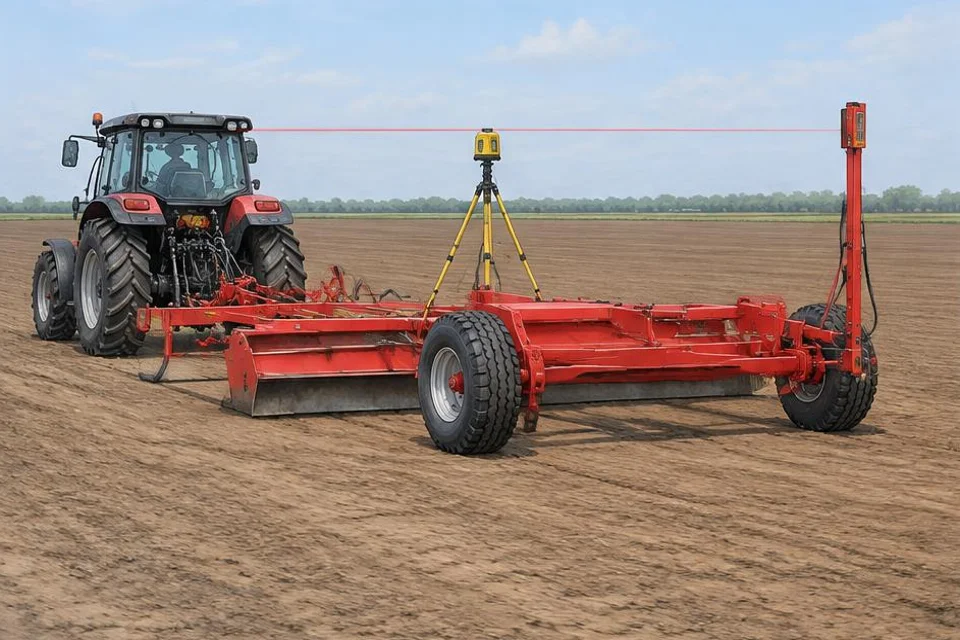
AI-generated illustration · Not a specific model photograph
1. Define the levelling objective first
A laser land leveller uses a laser reference and control system to guide a soil-moving bucket or blade. The target surface must suit the field's irrigation and drainage plan; it should not be chosen casually. Arrange a site assessment with a competent provider and consult local agricultural or irrigation specialists about the required field layout.
- Identify boundaries, water entry points, outlets and obstacles before accepting a quotation.
2. Verify the complete equipment package
Ask what the offer includes: transmitter, receiver, controls, hydraulic components, bucket or blade, supports and power arrangements. Confirm the exact model, operating limitations and calibration support. A demonstration should show that the complete system works together. For used equipment, have a qualified technician assess electronics, hydraulic condition, frame wear and the availability of replacement components.
- Do not compare a complete working package with a quotation excluding essential components.
3. Match the tractor and site conditions
Check the manufacturer's requirements for tractor power, hydraulic flow and pressure, connections, hitch or drawbar arrangement and permitted configuration. Bucket size alone is not a compatibility test. Soil-moving demand and field conditions matter. The specifications of one university-described leveller are model-specific, not a universal horsepower rule for all laser levellers.
- Have a dealer or qualified technician approve the actual tractor–leveller combination.
4. Put hiring terms in writing
Agree on the assessed area, intended surface, charging basis, transport, operator, fuel responsibility and treatment of delays. Ask how initial levels and completed work will be checked, and how disagreements will be resolved. Clarify whether preliminary preparation or additional soil movement is included. An hourly quote alone does not establish the final job cost.
- Record the acceptance method before work starts, not after payment becomes due.
5. Compare ownership with dependable access
Buying also means training, calibration, secure storage, repairs and seasonal utilisation. Hiring may suit occasional work if a competent provider is available on time. Request a realistic service plan rather than guaranteed irrigation or yield gains. Operators must follow the exact manuals, protect the work zone and safely isolate equipment before inspections, adjustments or maintenance.
- Keep the field assessment, completion record and service invoices for future planning.