
Electric tractors
Electric vs Diesel Tractors: Charging, Workload and Service
Tractorbandhu Editorial · 29 October 2026
Compare real field duties, charging access, implement compatibility and service support rather than headline running-cost claims.
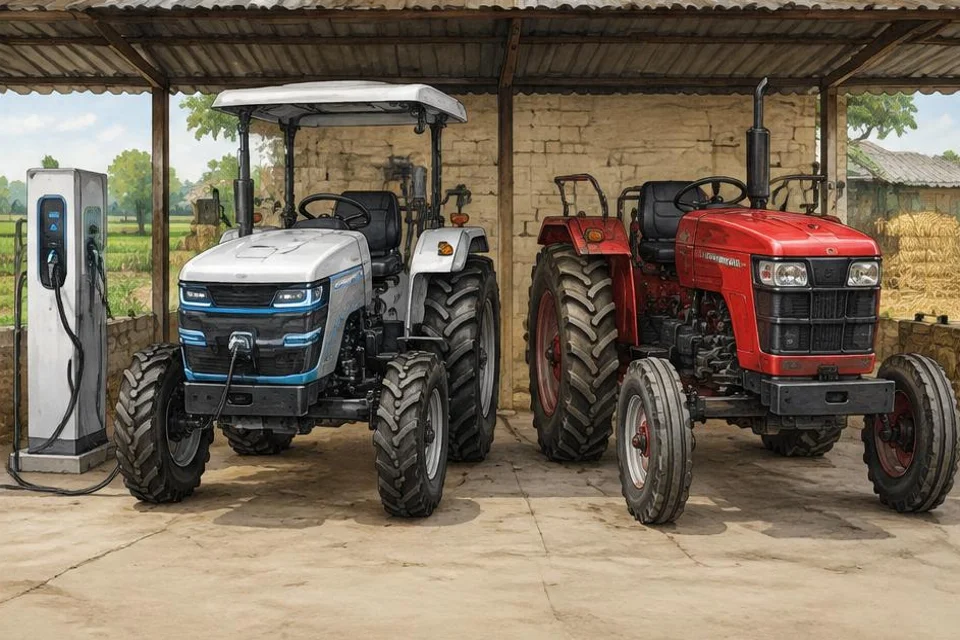
AI-generated illustration · Not a specific model photograph
Begin with your actual working day
Electric and diesel tractors should be compared against the same jobs, not simply against a power label. List the implements, soil conditions, slopes, transport distances and daily working windows on your farm. Record which operations must continue without a long break during sowing or harvest. A compact electric tractor may suit some repeated local tasks without replacing every diesel duty. Ask for a demonstration with your intended implement and load before deciding that either powertrain is sufficient for the whole farm.
Compare usable performance rather than headline power
Check whether a quoted motor figure is continuous output or a short-duration peak. Engine horsepower, motor ratings and power delivered to an implement are not automatically interchangeable. Verify PTO requirements, hydraulic lift, linkage, traction, tyre choice and braking for the actual model. Sonalika's Tiger Electric brochure publishes motor and implement-related specifications, showing why a detailed model sheet matters. A tractor that moves an attachment is not necessarily capable of operating it productively for the required duration. Use a representative field trial to measure completed work.
Plan charging as part of the work schedule
Ask for the approved charger specification, electrical supply requirements, earthing and installation procedure for the exact variant. Have a qualified professional assess the site. A suitable socket, protected connection and safe parking location matter more than a general claim that charging is possible at home. Confirm charging time under the stated conditions, whether the charger is included and what happens during power cuts. Do not assume fast charging, battery swapping or any particular connector is supported unless the manufacturer confirms it for that model.
Treat operating duration as workload-dependent
Battery use changes with draft load, PTO work, terrain, temperature, operating technique and battery condition. A runtime statement without its test conditions is not a guaranteed working shift. Ask what charge reserve is recommended and whether output changes as charge falls. Diesel refuelling can help maintain long work periods where fuel is available, but diesel use also varies with the job and machine condition. For either type, compare work completed and downtime over a representative day rather than treating an advertised duration as universal.
Calculate ownership costs without adopting marketing promises
Sonalika's official electric materials describe charging and running-cost advantages, but their historical marketing claims are not a quotation for your farm. Obtain current purchase and installation quotes, your electricity tariff or diesel cost, and realistic consumption measured under comparable work. Include finance, insurance, scheduled service, tyres and likely downtime. Ask separately about battery warranty conditions, exclusions and replacement arrangements. Electric drive has fewer engine-related service tasks, but that does not make the complete tractor maintenance-free. Hydraulics, brakes, tyres and electrical systems still need attention.
Check service capability and keep a practical backup
Ask where trained technicians are based, which components they can diagnose locally and how the tractor is transported if it cannot move. Confirm parts availability and written warranty responsibilities for the battery, charger and tractor separately. Diesel ownership also requires reliable servicing and spares, so compare the actual local networks rather than brand familiarity alone. Check registration, insurance and any claimed assistance with the relevant authority; electric propulsion does not automatically establish subsidy eligibility. Choose a machine whose workload, charging or fuel arrangements and repair support fit your busiest season, with a backup plan for interruptions.