
Implements
Disc Harrow vs Mouldboard Plough: Different Jobs, Different Decisions
Tractorbandhu Editorial · 29 October 2026
Learn why a disc harrow is not a disc plough, when soil inversion matters, and what to check before selecting either implement.
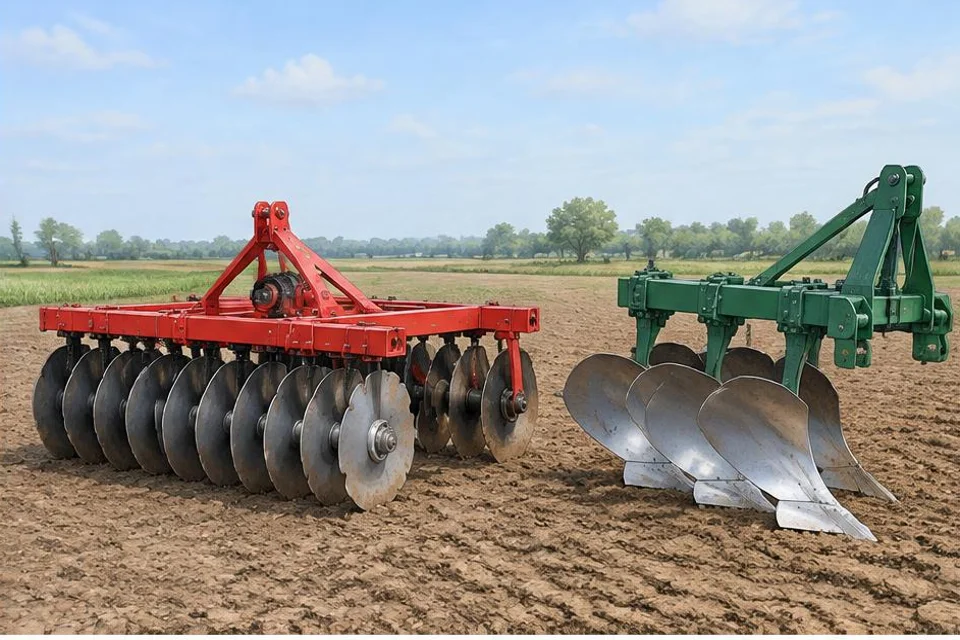
AI-generated illustration · Not a specific model photograph
1. Understand the two working actions
A mouldboard plough cuts and turns a furrow slice, making it a primary-tillage option where inversion is required. A disc harrow uses gangs of discs to cut, mix and break soil and residues, commonly during secondary tillage. It is not the same implement as a disc plough. Names used casually by sellers can therefore cause expensive confusion.
- Ask for the implement's model identification and a clear description of its intended operation.
2. Decide whether inversion is necessary
Begin with the crop sequence, field history and the condition left by the previous harvest. Turning soil is a specific operation, not a compulsory annual step for every farm. Discuss residue placement, weed management and the next crop's establishment needs with a local agronomist. A harrow should not be expected to reproduce a mouldboard plough's inversion action.
- Choose the required field outcome before comparing width, price or brand.
3. Match draft, weight and configuration
Check the manuals for the actual plough or harrow configuration. Working width, number of bodies or discs, implement weight and intended depth all influence suitability. Confirm tractor hitch or drawbar requirements, hydraulic capacity where relevant, tyre guidance and permitted ballast. There is no single horsepower rule covering every soil, implement design and operating condition.
- Seek written dealer confirmation for the proposed tractor and implement combination.
4. Inspect condition and compare demonstrations
On a used mouldboard plough, ask a technician to assess shares, mouldboards, landsides, frame alignment and any reversing mechanism. On a disc harrow, inspect discs, bearings, scrapers and frame condition. Arrange a qualified demonstration on representative land. Judge the required result, blockage frequency, wear condition and remaining field operations rather than appearance alone.
- Request availability and prices for the specific wearing parts before purchase.
5. Plan safe movement and seasonal use
Consider field entrances, headlands, transport width and secure storage as part of the purchase. Qualified operators should attach, adjust and operate the implement according to its exact manual. Never stand beneath an unsupported raised implement or enter a moving machine's working zone. Hiring can be sensible when the operation is infrequent or suitability remains uncertain.
- Review the result with your agronomist before repeating the same tillage sequence.