
Fuel Care
Diesel Storage on the Farm: Control Water, Dirt and Uncertain Fuel
Tractorbandhu Editorial · 29 October 2026
Protect fuel quality through suitable storage, clean transfer equipment, stock rotation and prompt investigation of contamination.
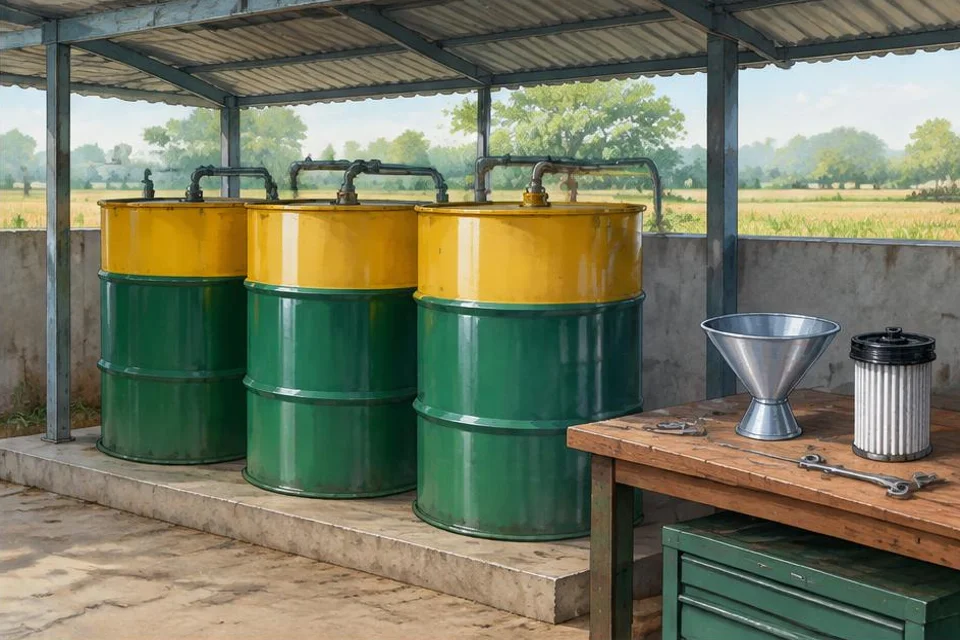
AI-generated illustration · Not a specific model photograph
1. Buy for traceability, not just price
Fuel cleanliness begins before diesel reaches the tractor. Use a dependable supplier and retain delivery dates, quantities and invoices. Purchase amounts that match realistic consumption rather than building an unmanaged reserve. Diesel storage life depends on its specification, storage conditions and contamination; one fixed shelf-life claim does not fit every farm. Ask the supplier about seasonal suitability and any storage limitations.
- Label stocks so older suitable fuel can be used first.
2. Choose storage that excludes rain and dirt
Use containers or tanks intended for diesel and comply with local fire, environmental and storage requirements. Keep caps, vents and seals in their approved condition. Locate filling points away from roof runoff and standing water. A covered tank can still collect condensation, so rain protection alone is insufficient. Follow supplier guidance on filling space; do not brim containers or obstruct vents in an attempt to exclude moisture.
- Never reuse food containers or unidentified chemical drums for fuel.
3. Make transfer equipment part of fuel care
A clean delivery can become dirty through an uncovered funnel, dusty nozzle or unsuitable transfer pump. Keep dispensing equipment protected and use filtration specified for the installation and tractor requirements. Refuel with the engine stopped, away from ignition sources, following the manual's precautions. Clean around the filler before opening it. Do not use cloth as an improvised filter; fibres and uncontrolled dirt can enter the system.
- Keep separate, clearly identified equipment for diesel handling.
4. Treat warning signs as evidence, not a diagnosis
Repeated filter blockage, water-separator warnings or poor running after refuelling may point to contaminated fuel, but other faults can look similar. Stop using a suspect batch and tell the service technician when symptoms began. Follow the exact manual for separator checks or draining. Never open high-pressure diesel lines to investigate. Water removal and tank cleaning may require specialist equipment and proper disposal arrangements.
- Do not pour drained fuel or contaminated water onto soil.
5. Avoid treating every problem with an additive
Additives cannot make every contaminated fuel batch safe to use. Fuel stabilisers, cold-weather products and microbial treatments serve different purposes and may have compatibility restrictions. Seek the fuel supplier's and tractor manufacturer's advice before treatment, especially where biodiesel blends are involved. Keep a record of products used and maintenance performed. Have a qualified technician investigate recurring contamination instead of repeatedly replacing filters without finding its source.
- Use approved products only at their specified application rate.