
Maintenance
Daily Tractor Checks Before Field Work
Tractorbandhu Editorial · 29 October 2026
Use a consistent walk-around, safe fluid checks and a controlled start to identify faults before field work.
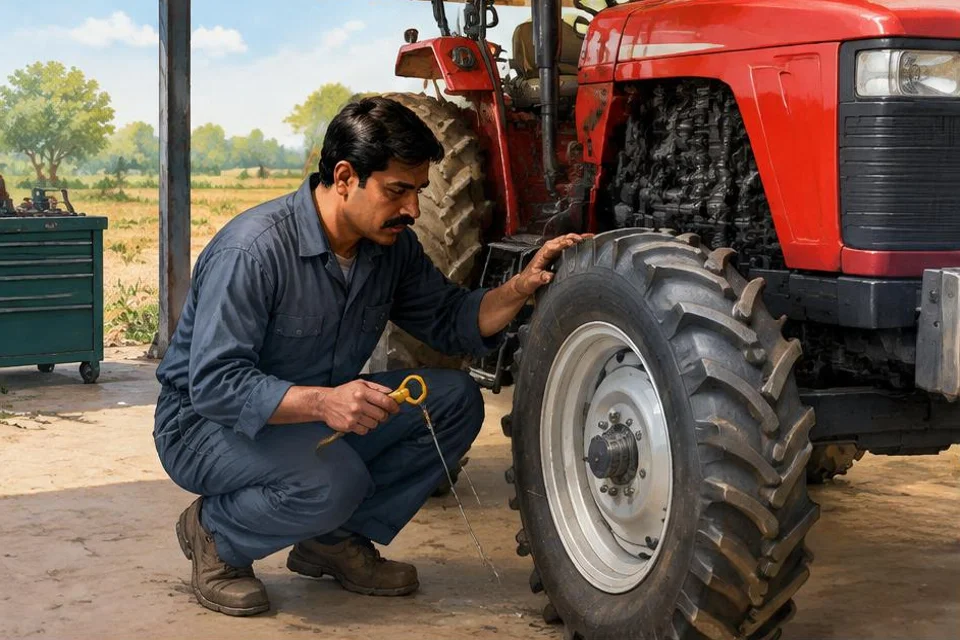
AI-generated illustration · Not a specific model photograph
Prepare a safe checking routine
A daily check is a short decision process: is this tractor and its attachment ready for today’s work? John Deere’s maintenance guide recommends a morning walk-around, attention to fluids, tyres, air intake, hydraulics and controls. Use that overview alongside the operator manual for your exact machine, not instead of it. Park on suitable level ground, lower attachments, apply the parking brake, stop the engine and allow moving parts to become completely stationary before close inspection.
Walk around before touching anything
Look beneath the tractor for fresh wet patches, then inspect visible hoses, wiring, guards and attachment points without reaching into hazardous areas. A leak deserves investigation before it becomes a field breakdown. Check tyres for cuts, embedded objects and visible damage; use the manual’s pressure guidance for the fitted tyres and load. Do not assume a tyre is correctly inflated because it looks normal. Note loose or missing components and arrange competent repair rather than continuing with a known safety defect.
- Look for fuel, oil or coolant traces.
- Check steps, handholds and the operator area.
- Inspect visible hitch pins, retainers and guards.
Check fluids only as the manual directs
Check engine oil and other specified fluid levels under the conditions required by the manual. Some readings depend on temperature or machine position, so one method does not suit every system. Inspect coolant only by the approved procedure when safe; never open a hot cooling system. Use the specified fluid and keep dirt out of filling points. Repeatedly adding fluid without finding the cause of loss is not a repair and can hide a fault that needs workshop attention.
Keep cooling and driveline protection effective
Look for blocked screens or debris around cooling and air-intake areas. Clean only with the engine stopped, components stationary and the correct manual procedure; avoid damaging fins or pushing contamination into the intake. Inspect PTO guarding before work. Deere’s driveline safety guidance requires effective shields and close-fitting clothing. Never step across a rotating shaft. If a hose is damaged or a hydraulic leak is suspected, keep clear and call trained service personnel; never search for a pressurised leak with your hand.
Make a controlled start and function check
After the walk-around, remove tools and make sure everyone is clear. Start from the operator’s seat using the manual’s neutral, brake and PTO instructions. Watch warning indicators and listen for unfamiliar noise. Test steering, braking and implement response only in a clear, suitable area using the prescribed procedure. Keep people away from lifted equipment and rotating tools. Stop if a critical warning remains, braking is unreliable or the attachment behaves unexpectedly; a rushed departure is not worth losing control.
- Confirm lights, horn and indicators where fitted.
- Check the planned route and nearby people.
- Keep passengers off unless an approved passenger position is provided.
Record defects and know when to stop
Keep a simple dated log with operating hours, observations and any service arranged. Daily checks complement scheduled maintenance; they do not extend oil or filter intervals automatically. Follow the manual’s hour-based and time-based requirements and any instructions for dusty conditions. Decide clearly whether an observation permits operation or requires repair, using qualified advice when uncertain. A tractor that fails an essential safety check should remain out of service until corrected, even when weather makes the day’s field work urgent.