
Used Tractors
Buying a Used Tractor: Inspection and Paperwork Checklist
Tractorbandhu Editorial · 29 October 2026
Combine an independent mechanical inspection with verified identity, ownership records and a documented transfer plan.
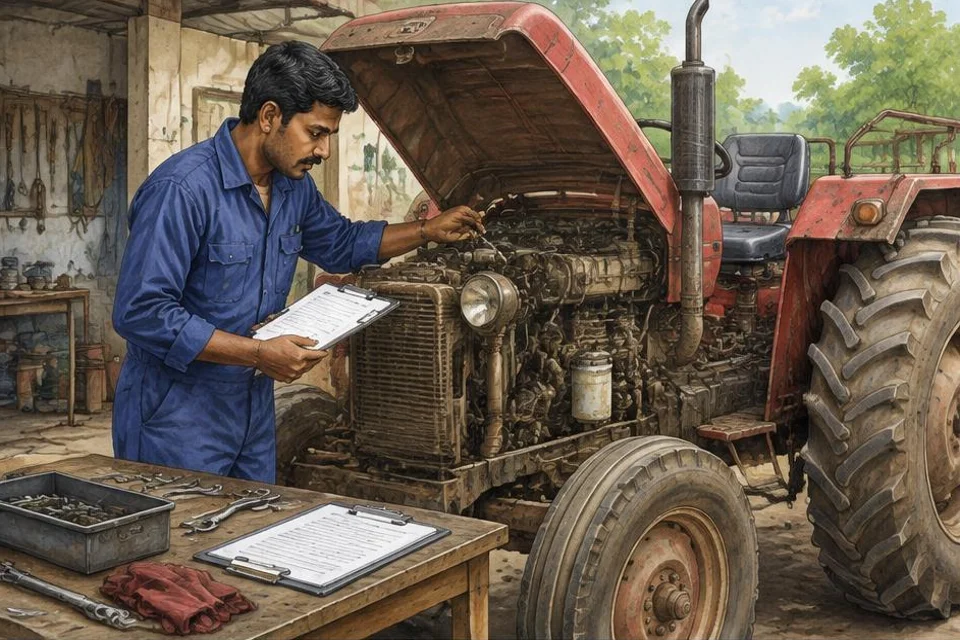
AI-generated illustration · Not a specific model photograph
Define the purchase before viewing
A used tractor should suit the implements, terrain and workload you actually have, not merely appear affordable. Write down the required jobs, likely repair allowance and maximum total budget before arranging visits. Ask the seller for the exact model, identification details, ownership history and available maintenance records. Treat an hour-meter reading as one clue rather than proof of condition. A well-presented tractor can still have mechanical faults or unresolved documentation that change the value of the purchase.
Inspect identity and condition independently
Arrange an inspection by an experienced mechanic who is not relying on the sale. With the tractor safely parked, engine stopped and all movement ceased, compare visible identification markings with the documents without altering or scraping them. Examine tyres, guards, hitch components, accessible hoses and signs of leakage or structural repair. Fresh paint is not automatically a problem, but ask what was repaired and request invoices. Missing protection should be costed and corrected before operation, not dismissed as cosmetic wear.
- Record model and identification details with permission.
- Ask about major repairs and replacement components.
- Keep a written list of defects and uncertain findings.
Observe a safe, representative demonstration
Ask the seller and mechanic to arrange a controlled demonstration, including a cold start where practical and agreed. Observe starting behaviour, warning indicators, unusual noise and visible exhaust, but do not diagnose a major fault from one symptom alone. A trained operator should assess gears, clutch, brakes, steering and hydraulics in a clear area. Any implement trial must use a compatible, guarded setup. Never touch a suspected hydraulic leak, open hot coolant or approach a rotating PTO to investigate a concern.
Verify ownership and finance records
Ask for the seller’s identity and authority to sell, and compare the machine’s details with the registration record where applicable. If an agent is involved, verify the owner’s authorisation. Ask about finance or hypothecation and obtain appropriate lender confirmation where needed. Parivahan’s ownership-transfer guidance describes normal-sale forms and supporting documentation, but the applicable route depends on the registration and circumstances. Confirm requirements directly with the local registering authority rather than assuming a receipt alone transfers registered ownership.
Agree documents, payment and transfer steps
Before paying, confirm which original records, seller signatures and transfer applications are required for this transaction. Ask the local authority about any relevant insurance, tax, clearance, interstate or other supporting requirements instead of treating a generic checklist as universal law. Put the identification details, included implements, agreed price, known defects and delivery arrangements into a written sale record. Use traceable payment arrangements and agree how pending verification or transfer steps will be handled before handing over the full amount.
- Verify seller and registered-owner details.
- Resolve finance questions through the relevant lender.
- Keep copies, payment evidence and application acknowledgements.
Budget for readiness, not just purchase
Add transport, inspection, immediate repairs, replacement guards, service fluids and likely tyre costs to the quoted price. Use the correct operator manual and an initial service assessment to plan safe commissioning. Ask the mechanic which faults are urgent and which can be monitored, without assuming every repair estimate is certain. Walk away if identity cannot be reconciled, the seller blocks independent inspection or important transfer questions remain unresolved. A cheaper tractor is not a bargain when it cannot be safely used or properly transferred.