
Tractor Comparison
35 HP vs 45 HP Tractors: Which Suits Your Work?
Tractorbandhu Editorial · 29 October 2026
Compare actual implements, PTO output, traction and seasonal workload before paying for a higher horsepower class.
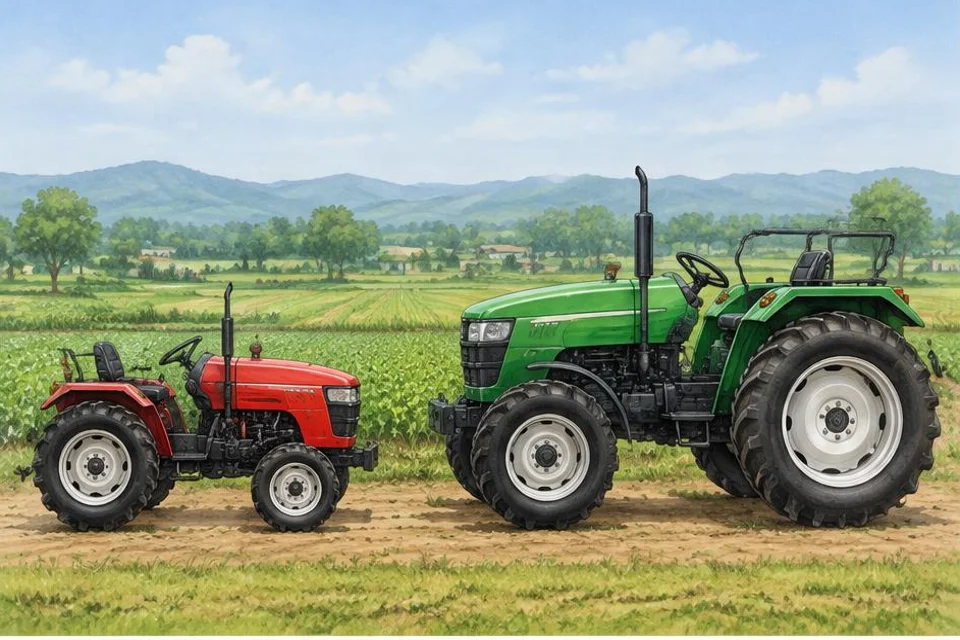
AI-generated illustration · Not a specific model photograph
1. Treat horsepower classes as a starting point
By Tractorbandhu Editorial. A 35 HP versus 45 HP decision is not a contest with one universal winner. First confirm whether the quoted figure is engine horsepower and which exact variant it describes. A class label does not tell you PTO output, tractor weight, hydraulic capability or available working speeds. Nor does farm acreage alone settle the choice. Write down the jobs that must be completed during the busiest period and separate essential capacity from capacity you might only occasionally use or could obtain through hiring.
2. Compare the implements you will actually operate
For each rotavator, cultivator, seed drill, sprayer or other attachment, obtain the manufacturer’s recommended tractor range and operating conditions. Where relevant, record minimum PTO power, required speed, implement mass and hydraulic connections. Mahindra’s selection guide explains why adequate PTO output, hydraulics and hitch compatibility must be checked together. If a 35 HP model falls outside a required implement’s approved range, do not solve that mismatch by driving more slowly or adding unapproved ballast. Check an appropriately matched tractor or a different implement instead.
3. Separate pulling performance from PTO performance
Soil-engaging implements need usable traction as well as engine output. A higher engine rating does not guarantee better progress if tyres repeatedly slip or ground conditions are unsuitable. PTO-driven equipment has a different requirement: sufficient power at the specified shaft speed. Compare manufacturer-published PTO ratings for the two actual models instead of estimating a fixed percentage from engine horsepower. Also examine low-speed gears, torque characteristics and approved tyre configurations. John Deere’s product guidance illustrates that torque and transmission features affect working behaviour beyond the headline horsepower number.
4. Test the seasonal bottleneck, not just an easy pass
Ask for a dealer-supervised demonstration with a compatible implement in representative soil. Compare achieved depth, working width, travel speed, turning time and quality of the finished job. Record conditions so that a dry-field demonstration is not mistaken for proof of wet-season performance. A 45 HP model may support an appropriately matched larger implement, but it will not automatically finish every job proportionately faster. Access restrictions, plot shape, refilling, transport and weather can dominate the day. Do not exceed equipment limits to manufacture an impressive demonstration.
5. Compare total cost and useful utilisation
Request quotations for equivalent configurations, including the implements each tractor actually needs. Compare down payment, complete finance schedule, insurance, servicing, tyres and expected annual hours. Ask for fuel observations from comparable work, preferably expressed against the completed task as well as time. Neither the smaller nor the larger class is always cheaper per finished job. If peak heavy work is infrequent, compare hiring that service with owning extra capacity throughout the year. Consider local parts availability and downtime alongside the purchase amount, without assuming either class has a guaranteed resale value.
6. Make the decision with a written checklist
Choose the 35 HP candidate if it meets every essential implement requirement, access constraint and realistic work deadline at an affordable total cost. Consider the 45 HP candidate when a documented workload or approved attachment needs the additional capability and the complete package remains affordable. Confirm the actual specifications before signing. For attachment checks, park securely, lower equipment safely, disengage and isolate PTO, stop the engine, remove the key and wait until all parts are fully stationary. Keep shields installed. Have trained personnel confirm the match rather than treating horsepower as a safety approval.